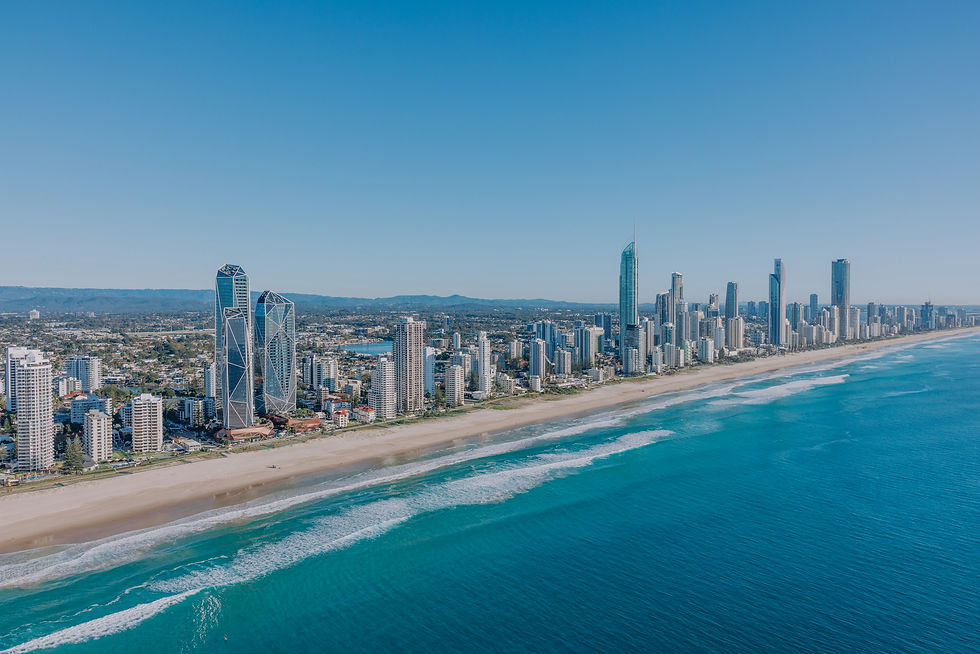
Punta Cana's coast, broken down: Bávaro, Arena Gorda, Macao and what each beach is actually like
- lostringmallorca

- Jun 30
- 4 min read
The fifty kilometres of shoreline stretching north of Punta Cana International Airport share the same postcard elements — fine white coral sand, coconut palms, turquoise water over a distant reef — but the beaches themselves are not interchangeable. Bávaro is wide, resort-fronted, and busy by nine in the morning. Arena Gorda, a few kilometres north, holds a Blue Flag certification and far fewer sunbeds. Macao, another half-hour further up the coast, is a wide public bay with real wave action and a handful of local restaurants under the palms. Knowing the differences is useful before you arrive.
A coast built on coral
Punta Cana's sand is made almost entirely of ground coral and shell rather than weathered rock — which is what gives it the bright white colour and fine, almost powdery texture characteristic of this coast. The same offshore reef that created that material also shelters most of the Bávaro and Arena Gorda stretch from Atlantic swell, keeping the water calm in conditions that would produce choppy surf elsewhere. Over the reef, in the shallower sections, the water turns a vivid turquoise because the pale sand below reflects light upward; beyond the reef line, where the bottom drops away, it shifts to deep blue.
Bávaro — the main resort stretch
Bávaro runs for roughly ten kilometres, fronted by an almost continuous line of all-inclusive hotels. The water is consistently calm and shallow — in places you can walk out fifty metres and still be waist-deep — and the fine sand compacts very little underfoot. Morning is the quietest time; by late morning in peak season, the most popular stretches in front of the busier resorts fill quickly. Access beyond hotel frontages varies: some sections have public beach clubs, others are effectively resort-only. For families with young children or anyone who prefers still, clear water for swimming, Bávaro is well-suited.
Arena Gorda — Blue Flag, fewer people
A few kilometres north of central Bávaro, Playa Arena Gorda sits between the main resort zone and Macao. It holds a Blue Flag certification — which requires meeting defined standards on water quality, safety, and environmental management — and feels noticeably less crowded than the busiest Bávaro stretches. The sand is similarly fine, the reef protection comparable, and the water calm. Public access is easier here than at the all-inclusive sections further south, with the main entry point via the KUKUA Beach Club.
Macao — a different feel
Macao is around thirty minutes' drive north of Bávaro and operates on a completely different scale. There are no all-inclusive hotels directly on the beach — just local restaurants, a couple of watersport operators, and a wide bay where the reef protection is less complete. That means more wave action: Macao is one of the few spots on this coast where bodyboarding and beginner surfing are practical. When the green flags are up, the water is calm enough for swimming. When lifeguards post yellow or red flags — which can happen after storms or when Atlantic swell pushes through — currents in the bay can be deceptive, and swimming is not recommended.
Sea temperatures and seasons
The water off Punta Cana stays warm throughout the year — typically around 25°C from January through March, rising to about 29°C by August and September. The swimming season never really closes. December to April is the dry season: minimal rain, calmer trade winds, and the clearest water of the year. May through November is wetter, with afternoon showers arriving on most days and a real — if modest — risk of tropical storms from June onward. The rain usually passes within an hour, and most weather forecast tools overstate the disruption for this particular coast.
Sargassum — what it is, when it arrives
Punta Cana sits in the path of Atlantic sargassum, and since the mid-2010s large quantities of this free-floating brown seaweed have washed ashore, particularly from May through October. Sargassum is not harmful — it is a natural seaweed and perfectly safe to swim through — but it accumulates on the sand quickly and produces a faint sulphur smell as it decomposes. Arrival patterns vary considerably by year and by beach section: the resort-managed stretches of Bávaro clear it daily, while a public beach like Macao sees it more openly. Checking recent visitor photos for your specific travel dates — a week before departure rather than months in advance — gives a more accurate picture than general seasonal forecasts.
What warm water quietly does to a ring
One practical detail worth noting before a beach day here: warm Caribbean water causes fingers to slim fractionally. The body dilates blood vessels near the skin in heat to help shed excess warmth, and fingers narrow slightly as a result — sometimes by a millimetre or two. On a wedding band or holiday ring that already fits loosely, that margin can be enough. Combine it with repeated dips, sun-cream application, sand-handling, and the mild activity of a long beach day, and the sequence for losing a ring quietly assembles itself without anyone noticing.
A ring checked on dry hands in the morning, fitting snugly, is unlikely to cause problems. One that already turns freely is worth resizing before travel — or leaving in the hotel safe for beach days. If something does go missing, the fine white coral sand and calm, shallow water at Bávaro are among the more recoverable environments for a metal detecting search. Beach recovery services across the Dominican Republic are best reached quickly — the sooner a specialist is contacted, the better the chances of finding it.
If a ring or piece of jewellery does go missing on a Punta Cana beach, recovery from shallow sand or the water's edge is often possible when a search starts soon after the loss. RingSeekers lists ring recovery help in Punta Cana — reaching out to the right specialist quickly is the most practical first step.