How Benidorm decided to grow upwards: from tuna nets to Europe's tallest beach skyline
- lostringmallorca

- Jul 12
- 4 min read
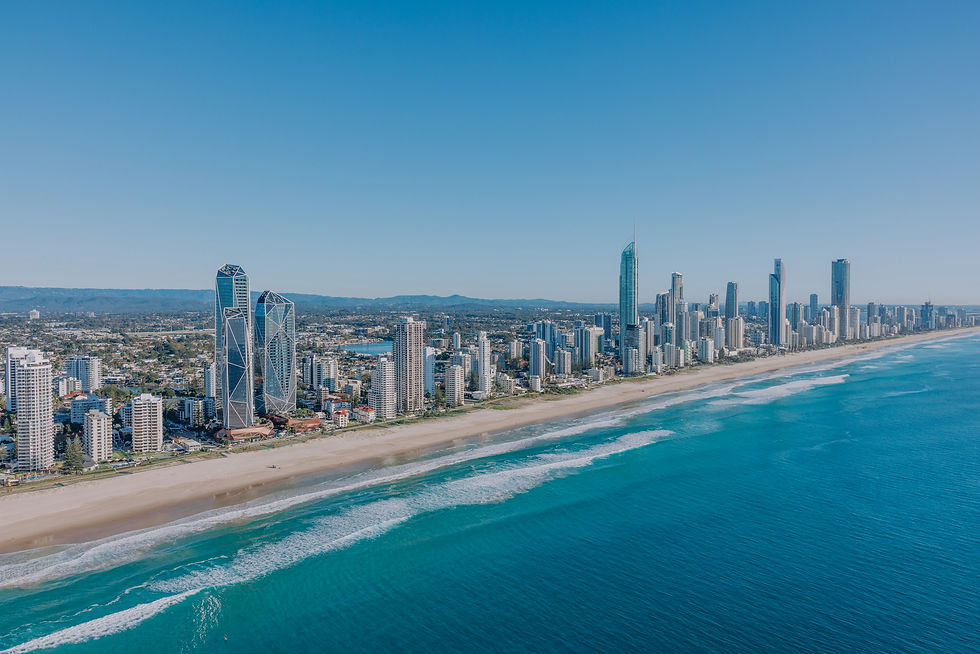
Seen from the motorway, Benidorm looks like a rendering error: a wall of forty-storey towers rising from a stretch of Spanish coast where every neighbouring town stays stubbornly low. The skyline gets described with a smirk — the Manhattan of the Mediterranean, "Beniyork" — but it is actually one of the most deliberate pieces of town planning on the European coast. The towers, the two great beaches, even the crowds in January all trace back to decisions made in a struggling tuna-fishing village in the 1950s.
A tuna village runs out of tuna
Benidorm's town charter dates to 1325, and for six centuries afterwards almost nothing about the place suggested a future in tourism. It was a fishing settlement on a dry coastal plain where farming barely paid, and its speciality was tuna, caught with the almadraba — a labyrinth of anchored nets whose design goes back to Islamic Spain. Benidorm's crews became so good at it that they were hired to run almadrabas along much of the Spanish coast. Then, in the early 1950s, the catch collapsed. A village of a few thousand people had lost its industry, and the town hall was forced to think hard about what else a place with five kilometres of sand might offer.
The mayor on a Vespa
The answer arrived with Pedro Zaragoza Orts, who became mayor in 1950. Zaragoza pushed through a general urban plan in 1956 — a startling document for what was still a village — zoning the shoreline for hotels and apartment towers, with wide avenues and required open space around each building. His most famous decision, though, involved swimwear. The bikini was effectively forbidden in Franco's Spain, and tourists who wore one risked a fine from the Guardia Civil. As Zaragoza later told the story, he set off on his Vespa before dawn one day in 1959 and rode the better part of nine hours to Madrid to argue, in person, that northern European visitors would not keep coming to a coast where they could not dress as they did at home. Benidorm became one of the first places in Spain where the bikini was officially tolerated — and the package-holiday boom followed.
The logic of building tall
The towers came later, but they follow the same plan. Benidorm's high-rises are often treated as an accident of greed; urban planners increasingly cite them as an example of efficient coastal density. Around 70,000 registered residents share the municipality with visitor numbers that run into the millions each year, and the town is regularly described as having more high-rise buildings per inhabitant than anywhere else in the world. Building upwards keeps all those beds within walking distance of the sand. Instead of a low sprawl of villas consuming kilometres of coastline — the pattern almost everywhere else on the Costa Blanca — Benidorm concentrates its guests into a compact grid where hardly anyone needs a car. The towers are even spaced and angled so the beaches keep their afternoon sun, a detail written into the planning rules rather than left to luck.
Levante and Poniente: two beaches, two temperaments
The town's sand divides neatly in two at the old quarter, which sits on a small headland crowned by the blue-and-white railed viewpoint known as the Balcón del Mediterráneo. To the east runs Levante — roughly two kilometres of fine golden sand facing the sunrise, backed by a promenade of bars and terraces, and comfortably the livelier of the pair. To the west, Poniente stretches more than three kilometres and feels noticeably calmer: more local, more residential, with room to breathe even in August. Tucked beneath the headland between them is the little cove of Mal Pas, and offshore sits the wedge-shaped Isla de Benidorm, a marine reserve reachable by the small boats that shuttle from the harbour. Both main beaches shelve gently, the water is calm on most days, and the sand is machine-groomed every morning of the year.
A beach that works twelve months a year
Geography does Benidorm one more favour. The Sierra Helada ridge closes the bay off to the north-east, and the bulk of Puig Campana and the ranges behind it screen the town from cold inland winds, producing a microclimate that stays noticeably milder than the surrounding coast in winter. That is why Benidorm became the winter-sun capital of Spain for British, Dutch and Scandinavian visitors, many of whom stay for months at a time. The result is something few beaches in Europe can claim: sand that is genuinely in use in January — swimmers included, on the warmer days.
What year-round crowds mean for small lost things
A beach that never empties is also a beach where things go missing in every month of the calendar. Warm water and sunscreen loosen rings; gently shelving fine sand swallows whatever drops within a wave or two. The physics, though, is more forgiving than it looks. The Mediterranean's tide here is measured in centimetres, so a ring that settles into the seabed tends to stay very close to where it fell rather than being dragged along the coast. On dry sand, a dropped ring usually sinks only a few centimetres and sits within a metre or two of the towel it slipped from. This is exactly why metal detecting specialists concentrate on busy resorts — and why beach recovery specialists working all along Spain's coast spend so much of their time in places like this one.
The first hour, if it happens
If a ring does come off, the most valuable thing you can do costs nothing: stop and fix the position. Benidorm's skyline is useful here — line up two towers behind your spot and note where you stand against them, or drop a pinned location on your phone. In the water, note how deep you were and what the bottom felt like. Resist the urge to let the whole family dig; trampling pushes small objects deeper and erases the clues. Note the time too, and remember that the overnight grooming machines work the dry sand, so anything lost near the waterline late in the day is best dealt with quickly. Then tell the lifeguard post and the town's lost-property office — honest finds get handed in more often than people expect.
And if a wedding band or a lost ring in Benidorm does end up under the sand, a specialist with a saltwater-capable detector can very often bring it home. RingSeekers lists ring recovery help in Benidorm, alongside recovery specialists in holiday destinations around the world.